Skip to content
How to Reduce Construction Noise in an Apartment
Reducing construction noise in an apartment requires managing construction site noise, vibration, and sound transmission through walls, windows, and structural elements. Apartments are especially vulnerable due to shared walls, shared structural elements, and limited exterior noise control. This page explains practical noise reduction approaches, their limits, and when residents should escalate concerns.
Reduce Construction Noise in an Apartment (Quick Start)
If you live in an apartment, focus first on where sound enters, not on treating entire rooms. Apartments amplify construction noise through shared structures, so solutions that block primary entry points work better than surface-level treatments.
What helps most in apartments:
- Window-focused barriers such as temporary window inserts or layered window treatments that reduce airborne construction noise
- Dense acoustic or noise-dampening curtains that limit mid- and high-frequency sound transmission through glass
- Sealing gaps around windows, doors, and vents to reduce sound leakage paths
- Room relocation, using interior rooms farther from the construction site for sleep or work
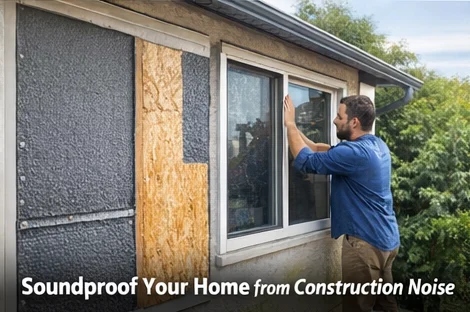
- Temporary window inserts with air gaps, which add mass and reduce sound transmission more effectively than single-layer coverings
- Secondary interior barriers, such as movable bookcases or wardrobes placed against exterior-facing walls to add density
- Soft-furnished room treatment, using rugs, mattresses, or upholstered furniture to reduce internal sound reflection and perceived loudness
- Door sealing and door sweeps, which limit noise leakage through poorly sealed apartment entry doors
- Time-based exposure management, adjusting sleep or work schedules to avoid peak construction periods when possible
These steps provide the highest practical noise reduction available to apartment residents. Effectiveness depends on distance from the construction site, building structure, and whether the dominant noise is airborne or vibration-based.
What has limited effectiveness:
- Acoustic foam panels used alone, which absorb echo but do not block external construction noise
- White noise or masking sounds for vibration-based or low-frequency construction noise
- Lightweight materials, which do little to stop high-energy or structure-borne sound
Effectiveness varies depending on distance from the construction site, building structure, and the dominant noise type.
Why Is Construction Noise Louder in Apartments?
Construction noise is louder in apartments because sound travels through shared structures as airborne noise and vibration-induced noise. Concrete slabs, framing, and window assemblies transmit sound waves, especially low-frequency noise from heavy equipment. Upper floors may experience less vibration, while lower floors often receive stronger structure-borne noise.
What Types of Construction Noise Affect Apartments Most?
Apartments are commonly affected by jackhammer noise, pile driving noise, excavator noise, and concrete mixing noise. These sources generate repetitive, high-energy sound that penetrates walls, windows, and shared building elements. Continuous equipment operation is more disruptive than intermittent noise due to sustained decibel (dB) exposure.
How Can You Block Construction Noise in an Apartment?
Blocking construction noise focuses on reducing sound entry points. Temporary noise barriers, acoustic curtains, and soundproofing measures near windows and doors can limit sound transmission. Complete isolation is rarely possible, but partial blocking can reduce perceived noise levels and improve daily comfort.
Do Acoustic Curtains Help With Construction Noise?
Acoustic curtains and noise dampening curtains help absorb mid- and high-frequency noise entering through windows. They are less effective against low-frequency vibration but can reduce echo and sound reflection inside rooms. Their effectiveness depends on curtain density, coverage area, and proximity to the noise source.
Can Vibration From Construction Be Reduced Inside Apartments?
Vibration reduction is difficult in apartments because vibration travels through the building structure. Vibration dampening techniques, such as isolating furniture from floors and walls, may reduce secondary noise. Structural vibration originating outside the building cannot be fully controlled from within an apartment.
Are Temporary Noise Reduction Solutions Effective?
Temporary solutions are useful for short-term construction activity. Options include portable sound barriers, room reconfiguration, and interior sound absorption. These methods reduce perceived noise but do not change actual construction noise levels. Effectiveness varies depending on distance and construction intensity.
What Construction Noise Solutions Work Best in Apartments?
Not all noise reduction methods are equally effective in apartment settings. Solutions that focus on primary sound entry points and room layout tend to deliver better results than lightweight or surface-level treatments.
These steps provide the highest practical noise reduction available to apartment residents. Effectiveness depends on distance from the construction site, building structure, and whether the dominant noise is airborne or vibration-based.
What Results Should Apartment Residents Expect?
Construction noise reduction in apartments typically results in partial sound level reduction rather than full noise elimination. Even small decibel (dB) reductions can significantly improve perceived comfort, especially during rest or work hours.
Vibration-based noise is the hardest to control because it travels through building structures rather than air. Interior treatments may reduce secondary noise but cannot fully block vibration originating outside the building.
Timing often matters more than loudness. Noise occurring during early morning or nighttime hours is more disruptive to sleep and concentration than higher noise levels during daytime periods. Managing exposure during sensitive hours usually provides the greatest quality-of-life improvement.
How Can You Measure Construction Noise in an Apartment?
Residents can use sound level meters or basic noise monitoring tools to measure indoor noise in decibels (dB). Recording noise levels and time patterns supports communication with building management or authorities when noise exceeds permitted limits or occurs outside allowed hours.
What Noise Levels Are Considered Excessive for Apartments?
Excessive construction noise is defined by local noise regulations and noise ordinances. Limits vary by jurisdiction and time of day. Early morning or nighttime noise is often restricted more strictly than daytime activity. Residents should verify local thresholds before taking formal action.
Health Considerations for Apartment Residents
Even when construction noise remains within legal limits, prolonged exposure can negatively impact residents. Noise can reduce sleep quality, increase stress, and impair concentration, particularly in apartments where escape or relocation is limited. Repeated disruption may lead to mental fatigue, irritability, and reduced daily functioning.
Managing exposure with noise barriers, soundproofing, and scheduling strategies can mitigate these effects, while keeping detailed records of noise levels and timing supports communication with building management or authorities. Even partial noise reduction can meaningfully improve comfort, focus, and overall quality of life during extended construction periods.
When Should Apartment Residents File Noise Complaints?
Residents should consider filing complaints when construction noise repeatedly exceeds permitted levels or violates working-hour restrictions. Documented noise assessment data, including dates and times, strengthens complaints. Many municipalities require evidence before enforcement action is taken.
Can Communication Reduce Construction Noise Near Apartments?
In some cases, communication helps. Pre-construction communication, community noise liaisons, and negotiated quieter periods may reduce disruption. This approach is more effective for scheduled activities than emergency or high-impact operations such as demolition.
Reduce Construction Noise in Apartments – FAQs
How can I sleep with construction noise in my apartment?
Sleeping with construction noise usually requires combining sound blocking, interior noise reduction, and noise masking. Effectiveness depends on noise intensity, duration, and timing. Low-frequency construction noise and vibration are harder to manage than intermittent or short-term sound.
What can you do about construction noise next door?
You can document construction noise levels, note dates and times, and review applicable noise ordinances. If noise exceeds permitted limits or occurs outside allowed hours, residents may contact local authorities or environmental noise enforcement bodies.
Does soundproofing completely block construction noise?
No. Soundproofing reduces sound transmission but cannot fully block high-energy construction noise. Vibration and low-frequency sound often travel through building structures, bypassing many residential soundproofing materials and limiting complete noise isolation.
Why is construction noise harder to block in apartments than houses?
Construction noise is harder to block in apartments because sound and vibration travel through shared walls, floors, and structural elements. Detached houses typically have fewer shared surfaces, giving residents greater control over noise transmission paths.
How can I protect my sleep from ongoing construction noise?
Protecting sleep from construction noise involves reducing sound entry, limiting indoor reflections, and masking residual noise. Bedroom location, building layout, and construction activity patterns influence effectiveness. Continuous or early-morning noise remains more disruptive than daytime activity.
Do building materials affect how much construction noise enters my apartment?
Yes. Sound transmission depends on wall, window, and floor materials. Dense materials reduce airborne noise better than lightweight partitions. However, structural vibration can still transmit through concrete or steel frames regardless of material density.